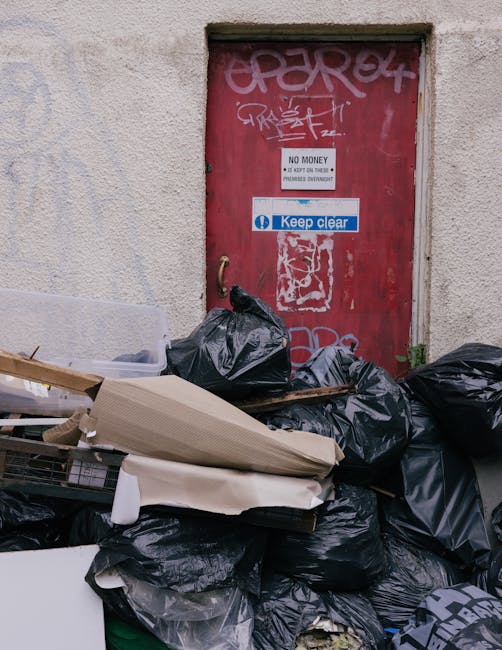
Hackney Council rubbish rules explained for Shoreditch homes
If you live in Shoreditch, rubbish can become awkward fast. One week it is a sofa blocking the hallway, the next it is a stack of cardboard, a broken desk, or a couple of bin bags that simply will not fit out front. This guide on Hackney Council rubbish rules explained for Shoreditch homes breaks everything down in plain English so you can keep your home tidy, avoid avoidable problems, and know what to do when the usual bin collection just is not enough.
The goal here is simple: help you work out what Hackney expects from households, what counts as normal domestic waste, where people usually go wrong, and how to deal with awkward items like furniture, garden waste, or renovation rubbish without creating a headache for yourself. Truth be told, most waste problems are not dramatic. They are just confusing. And confusion is where fines, fly-tipping complaints, and missed collections tend to start.
Quick expert summary: if it came from your home, sort it carefully, separate recyclables, keep the pavement clear, and use the right disposal route for bulky or specialist waste. When in doubt, slow down and check before you leave anything out.
Table of Contents
- Why Hackney Council rubbish rules explained for Shoreditch homes matters
- How the rubbish rules work in practice
- Key benefits and practical advantages
- Who this is for and when it makes sense
- Step-by-step guidance
- Expert tips for better results
- Common mistakes to avoid
- Tools, resources and recommendations
- Law, compliance, standards, or best practice
- Options, methods, or comparison table
- Case study or real-world example
- Practical checklist
- Conclusion
- Frequently asked questions
Why Hackney Council rubbish rules explained for Shoreditch homes matters
In a busy area like Shoreditch, rubbish is not just a household chore. It affects pavements, shared entrances, neighbours, bin stores, and the way your street feels day to day. You notice it most on a Monday morning or after a weekend clear-out: one wrongly placed bag can turn into a row of bags, and suddenly everyone is stepping around it. Not ideal.
Understanding the rules matters because household waste in Hackney is expected to be put out in a particular way, at the right time, and in the right container where possible. That sounds obvious, but the details are where people trip up. A bag left beside an overflowing bin, a mattress left outside "for now", or a builder's skip-style pile dumped with domestic waste can all cause issues.
There is also a practical side. Shoreditch homes are often flats, converted buildings, terraces with narrow frontages, or properties with shared access. That means the everyday rubbish routine is often less straightforward than in a bigger house with a private drive. You may need to think about bin storage, internal space, lift access, collection points, and whether an item needs separate handling.
If you are clearing a flat, a loft, a garage, or a room full of old furniture, it is worth thinking beyond the black bags. Services such as flat clearance, house clearance, or furniture disposal can help when the waste is too bulky or too much for normal collections. That is not about overcomplicating things; it is about using the right route.
How Hackney Council rubbish rules explained for Shoreditch homes works
The simplest way to think about the system is this: ordinary household waste goes in the regular domestic collection stream, recyclable materials should be separated where facilities allow, and bulky or specialist waste needs a different disposal method. The exact practical setup can vary a little depending on your property type, but the underlying logic stays the same.
1) General household rubbish
General waste usually means the non-recyclable everyday stuff from your home. Think food packaging that cannot be recycled, sanitary waste, broken household items that are not hazardous, and the usual mix of everyday refuse. Put it in the correct container, keep lids shut where possible, and do not overfill beyond what can reasonably be collected.
2) Recycling
Recycling is where sorting really matters. Clean paper, cardboard, cans, tins, glass, and certain plastics may be collected separately depending on the local system. The important bit is keeping recyclable items clean enough and separated enough to avoid contamination. A greasy takeaway box in the wrong place can spoil a whole bag more easily than people think.
3) Bulky waste
Bulky waste is the stuff that does not belong in a standard bin: mattresses, wardrobes, sofas, broken shelving, white goods, and similar large items. These should not be left on the street casually. If you need help moving them out responsibly, a dedicated furniture clearance or broader waste removal service is often the cleaner, less stressful option.
4) Garden and outdoor waste
If you have a small courtyard, balcony planting, or access to a garden, green waste needs its own common sense approach. Soil, branches, prunings, and bags of leaves are not the same as general domestic rubbish. They can be heavy, messy, and awkward to carry through communal spaces. A planned garden clearance is usually more sensible than improvising with too many bin bags.
5) Waste from DIY or repairs
Builders' rubble, old plasterboard, timber offcuts, tiles, and mixed renovation waste should be treated differently from household rubbish. If you have done a small kitchen update or a room refresh, normal bins are rarely the right answer. In those situations, builders waste clearance is the safer route. And yes, even one bag of rubble can feel heavier than it looks. Slightly unfair, really.
For businesses working from home or small Shoreditch offices, it is worth noting that commercial waste follows different expectations from domestic rubbish. If the waste came from a business activity, use a proper business route rather than household bins. Business waste removal and office clearance are more appropriate for those jobs.
Key benefits and practical advantages
Getting the rubbish rules right is not just about avoiding trouble. It genuinely makes life easier.
- Cleaner entrances and shared areas: less clutter means fewer smells, fewer pests, and less friction with neighbours.
- Fewer missed collections: the right container and right timing reduce the chance of waste being left behind.
- Lower risk of enforcement issues: placed correctly, waste is far less likely to be treated as an issue by the council or a managing agent.
- Safer movement through the property: especially important in flats, narrow hallways, and stairwells.
- Better recycling outcomes: sorting properly increases the chance that useful materials are actually processed as intended.
- Less stress during clear-outs: you know what to do with each item instead of making decisions at the kerbside with a bin bag in your hand.
There is also a subtle advantage people overlook: good waste habits save time. If you separate waste as you go, you do not end up doing the same job twice on a Sunday night with nowhere left to stand. Been there, not fun.
If your home clear-out is bigger than a standard bin situation but smaller than a full renovation, a focused home clearance can be a useful middle ground. It keeps the process orderly without turning your place upside down for days.
Who this is for and when it makes sense
This guide is for anyone living in a Shoreditch home who wants a clearer handle on rubbish, recycling, and disposal. That includes tenants, homeowners, flat sharers, landlords, managing agents, and people clearing a property after a move or refurb.
It makes particular sense if you are dealing with any of these situations:
- You live in a flat with limited bin storage.
- You share a waste area with other residents.
- You are moving out and have more rubbish than usual.
- You are replacing furniture and do not know what to do with the old items.
- You are clearing out a loft, garage, or storage room.
- You have DIY debris or packaging left over from home improvements.
- You are trying to keep a rented property tidy between tenancies.
If you are in a converted building or a compact terrace, the rules can feel tighter simply because the space is tighter. One overfilled bag near the front door can look like a small problem until the delivery drivers, neighbours, and bin crews all have to work around it.
For landlords and agents, this matters even more. Good waste discipline helps you present the property well and reduce the chance of complaints. For tenants, it helps avoid awkward conversations at the end of a tenancy. No one enjoys that, to be fair.
Step-by-step guidance
Here is a sensible way to deal with rubbish in a Shoreditch home without making it harder than it needs to be.
- Sort the waste into clear groups. Separate general waste, recycling, bulky items, food waste, and anything hazardous or specialist.
- Check what can go in the usual bin system. If it is everyday household rubbish and fits properly, that is usually the first route.
- Flatten and bundle where sensible. Cardboard, packaging, and some lightweight items take up less space once broken down.
- Keep shared access clear. Stairs, hallways, and pavements should stay safe and passable.
- Deal with bulky items separately. Sofas, mattresses, cabinets, and similar items should not be left out as if they will magically disappear.
- Schedule specialist clearance if needed. If the pile is too large, too awkward, or too mixed, use a suitable clearance service rather than forcing it through the household route.
- Double-check for restricted items. Certain materials should never be mixed casually with standard household rubbish.
A useful habit is to ask one question before you leave anything out: would a bin crew reasonably expect to collect this as normal household waste? If the answer is no, stop and rethink.
That small pause can save a lot of grief. And, frankly, a lot of dragging things back indoors again.
Expert tips for better results
From a practical point of view, the best waste routines are the boring ones. Boring is good here. Predictable, tidy, repeatable. That is what works.
Use the "one-touch" rule
When you handle an item, decide its destination immediately. Recycle it, bin it, store it for reuse, donate it, or book disposal. Do not move the same broken chair from room to room for three weeks. It becomes part of the furniture, which is never the plan.
Keep a clearing zone
If you are doing a room-by-room sort, create one area for items going out. It stops discarded items spreading through the flat and makes collection day simpler. Even in a small Shoreditch lounge, a corner near the door can be enough.
Take special care with mixed waste
Mixed waste is where people often make mistakes. A bag containing cardboard, food leftovers, plastic, and a bit of rubble is difficult to sort and may not belong in the regular collection stream. Keep categories cleaner from the start.
Plan around access
If you live up several flights of stairs, have a narrow entryway, or share a courtyard, think about movement before collection day. Measure awkward items. Clear the route. Make life easier for yourself. Small thing, big difference.
Match the service to the job
A single old armchair is not the same as clearing an entire flat. A few boxes from a loft are not the same as a full property clearance. If you choose a service that matches the scale of the job, everything feels calmer. For example, loft clearance works well when stored items have built up over time, while garage clearance suits bulky bits that have been sitting in one place far too long.
Common mistakes to avoid
Most rubbish issues in Shoreditch homes come from a handful of very ordinary mistakes. Nothing dramatic. Just the kind of thing that happens when people are rushing.
- Leaving items beside bins: if it is not accepted as part of the normal collection, it may be treated as dumped waste.
- Overfilling containers: overflowing bins are awkward for crews and can spill onto the pavement.
- Mixing recyclables with food waste: contamination can ruin a lot more than one bag.
- Dumping large items in communal areas: hallways and stairwells are not storage spaces.
- Assuming "someone will take it": they usually will not. Not unless it is arranged properly.
- Forgetting about shared rules: in flats, waste responsibilities often affect everyone, not just one household.
- Treating DIY rubble like domestic rubbish: it belongs in a separate stream.
One especially common issue is furniture. People replace a bed frame or sofa and then leave the old one "just until the weekend". Then the weekend becomes next week. Then everyone starts pretending it belongs to someone else. Much easier to arrange a proper pickup or clearance early.
If you are clearing out old items in good condition before disposal, it may help to look at furniture clearance and furniture disposal as separate but related options. The right choice depends on what the item is, how quickly it needs removing, and whether it is part of a bigger clear-out.
Tools, resources and recommendations
You do not need a complicated toolkit to manage household rubbish properly, but a few simple things help a lot.
- Strong bin bags: useful for moving sorted waste without splitting them halfway down the stairs.
- Labels or marker pens: handy for marking recycling, reuse, and disposal piles during a clear-out.
- Foldable boxes: better than loose piles when you are sorting paperwork, packaging, or small household items.
- Measuring tape: useful for checking whether bulky items will fit through a doorway or down a stairwell.
- Gloves: sensible for lofts, garages, garden waste, and anything dusty or sharp.
For larger jobs, it is worth choosing a provider that gives clear expectations on collection type, access, and handling. If you are comparing options, pricing and quotes can help you understand what level of service suits your situation, while recycling and sustainability is worth reading if you care about keeping as much waste as possible out of landfill where appropriate.
You may also want to review insurance and safety before booking any clearance work, especially if there are stairs, heavy items, or shared common parts involved. That extra bit of reassurance is not flashy, but it matters.
Law, compliance, standards, or best practice
For most Shoreditch households, compliance comes down to a few straightforward principles. Do not obstruct pavements or communal access, do not leave waste in a way that creates a nuisance, and do not mix domestic rubbish with items that need separate handling. That is the practical version, even if the formal wording is more detailed.
There are also some wider UK norms that are worth keeping in mind. Household waste should be presented in a way that is safe for collection crews and neighbours. Waste should be separated where local recycling systems require it. Items that are hazardous, sharp, or potentially contaminated should be handled carefully. And if the waste is generated by a business activity, it should not simply be put out as if it were normal household refuse.
Best practice is simple enough:
- keep waste contained;
- sort recyclables properly;
- use the correct collection route for bulky or specialist items;
- avoid blocking access;
- and do not assume a public pavement is a temporary storage area.
That last point sounds obvious, but it is the one people forget most often. A couple of hours becomes a couple of days and then, well, everyone notices.
If the rubbish comes from a property move, inheritance clearance, or a long-overdue declutter, a full house clearance may be more appropriate than piecemeal disposal. It keeps the process lawful, tidy, and far less chaotic.
Options, methods, or comparison table
Different waste situations need different solutions. Here is a simple comparison to help you decide what makes sense.
| Option | Best for | Strengths | Watch out for |
|---|---|---|---|
| Regular household bins | Everyday domestic waste and approved recycling | Simple, familiar, low effort | Limited capacity, not suitable for bulky items |
| Bulky item collection or clearance | Sofas, mattresses, wardrobes, mixed large items | Handles awkward waste properly | Needs planning and access |
| Specialist builders waste clearance | DIY debris and renovation offcuts | Safer for heavy, messy material | Not for ordinary household rubbish |
| Home or flat clearance | Multiple rooms, move-outs, clear-outs | Efficient for larger jobs | Requires more coordination |
| Office or business waste removal | Commercial waste from work activity | Proper route for non-domestic waste | Should not be mixed with household bins |
In real life, the decision is usually less about what sounds cheapest and more about what saves the most time and hassle overall. A quick bin strategy is fine for daily rubbish. Once furniture, packaging, rubble, or mixed clutter starts piling up, a more structured option nearly always wins.
Case study or real-world example
Imagine a Shoreditch flat with two bedrooms, a small hallway, and a shared bin store at the back of the building. The tenants have been replacing old furniture, clearing out a cupboard under the stairs, and dealing with a stack of delivery packaging after a couple of furniture orders. Suddenly there are boxes, a broken desk, an old mattress, and a bag of mixed rubbish all competing for space.
The first instinct is often to split it into "bin stuff" and "everything else" and hope the rest somehow disappears. In practice, that creates clutter at the entrance, blocks movement, and makes collection day messy. A better approach is to sort the packaging for recycling, bag the domestic waste correctly, identify the bulky furniture separately, and arrange the right clearance for the mattress and desk. The result is simple: less stress, less blockage, fewer arguments about whose job it is.
That sort of situation comes up a lot in London flats. Not because people are careless, but because space is limited and real life is messy. A proper plan helps. Every time.
Practical checklist
Use this checklist before putting rubbish out or booking a clearance.
- Have I separated general waste from recycling?
- Is anything bulky, heavy, sharp, or awkward?
- Does this item belong in the normal household collection stream?
- Will anything placed outside block a pavement, hall, or shared access point?
- Have I checked whether the waste came from domestic use or business activity?
- Do I need a specialist service for furniture, garden waste, or builders rubbish?
- Is the route to move items out safe and clear?
- Have I kept bags closed and containers manageable?
- Have I avoided mixing food waste into recyclables?
- Do I know when collection or removal is meant to happen?
If you can tick most of those off, you are probably on the right track. If several boxes feel uncertain, pause and sort the problem properly before it turns into a bigger one.
Conclusion
For Shoreditch homes, Hackney Council rubbish rules are really about being tidy, considerate, and practical with waste. The principle is simple, even if the day-to-day reality is not: use the right bin, sort recycling properly, keep access clear, and send bulky or specialist items down the correct route.
Once you get used to it, the system becomes far less annoying. You stop guessing, your home feels calmer, and rubbish no longer eats up your evenings. That alone is worth a lot. If you are facing a bigger clear-out, choosing the right disposal method early can save time, protect your property, and make life a good deal easier.
If your situation has moved beyond ordinary bin collections, take a moment to plan the job properly and choose the service that fits the waste you actually have, not the waste you wish you had. That one bit of honesty saves trouble.
Get a free quote today and see how much you can save.
And if all you do after reading this is sort one stubborn corner of the flat, that still counts. Small wins add up, especially in a busy place like Shoreditch.
Frequently Asked Questions
What are the main rubbish rules for Shoreditch homes?
The main rules are to separate waste properly, use the correct household bins or collection method, avoid blocking pavements or shared access areas, and treat bulky or specialist waste separately. The exact setup can vary by property type, but those basics hold true.
Can I leave a sofa or mattress beside the bins?
No, not as a casual option. Bulky items should be dealt with through the proper removal route. Leaving them beside bins can create obstructions and may be treated as dumped waste rather than normal household rubbish.
What should I do with old furniture in a flat?
For one or two items, a furniture-specific removal or clearance service is usually the clearest option. If the whole flat needs clearing, a broader flat or house clearance can be more efficient.
Does garden waste go in the same bin as household rubbish?
Usually not, at least not as a general rule of thumb. Green waste is better handled separately where possible. For larger amounts, a garden clearance is often the practical answer.
How do I dispose of DIY waste from home repairs?
DIY waste such as rubble, tiles, timber, and plasterboard should be treated differently from household rubbish. It normally needs a specialist route, such as builders waste clearance, rather than a standard bin.
What happens if I put the wrong waste out?
It may be left behind, cause contamination, or create an access problem. In some cases it can lead to complaints or enforcement issues. The safest approach is to sort it properly before collection day.
Can landlords tell tenants how rubbish should be handled?
Yes. In shared buildings or rental properties, landlords and managing agents often set waste expectations to keep common areas clean and avoid disputes. That is especially useful in flats and converted buildings.
Is recycling really worth the effort for small households?
Yes, because even a small amount of well-sorted recycling helps reduce mixed waste. It also makes your home easier to manage, which is a fairly underrated benefit when you are living in a compact space.
What if I have too much rubbish for the normal bins?
If the waste exceeds standard bin capacity or includes bulky items, use a proper removal or clearance service. Trying to force it into household bins usually creates more hassle than it solves.
How do I know whether I need a home clearance or waste removal?
If you are clearing multiple rooms, an entire property, or a large mix of items, home clearance is often more suitable. If you mainly need mixed rubbish taken away and the job is smaller, waste removal may be enough.
Are business bins the same as household bins?
No. Waste from business activity should be handled through a business-appropriate route. It should not be put out as ordinary household rubbish just because the bag is small.
What is the safest way to prepare rubbish before collection?
Sort it first, keep bags manageable, avoid overfilling, secure sharp objects, and leave enough space for safe movement. If the waste is awkward or heavy, do not try to improvise at the last minute. That is where people strain backs or damage walls. No thanks.