House Clearance Shoreditch: Recycling and Sustainability Commitment
 House Clearance Shoreditch is committed to delivering an eco-friendly waste disposal area approach across every home and commercial clearance we manage. In a dense urban neighbourhood like Shoreditch, sustainable rubbish management matters: it reduces landfill, supports local reuse, and lowers carbon emissions from haulage. Our Shoreditch house clearance teams prioritise recycling, reuse and responsible disposal, working to turn what might otherwise be waste into valuable materials or donated goods.
We operate with a clear set of sustainability targets and transparent reporting. Our immediate goal is to achieve a 75% recycling and reuse rate across all clearances by the end of the next fiscal year, with a longer-term aim of 85% diversion from landfill. These targets are realistic for the urban setting of Shoreditch because of established borough collection schemes and local reuse partners that accept a wide range of household and office items.
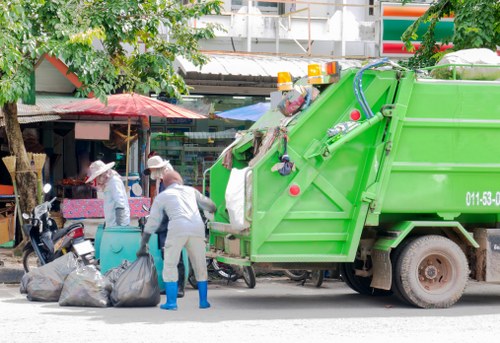
Practical Steps in the Sustainable Rubbish Area
In practice, sustainable rubbish collection for house clearances in Shoreditch means sorting on-site into clearly labelled streams: paper and cardboard, mixed plastics, glass, metal, electricals (WEEE), textiles and food/compostable material where possible. We align our sorting standards with local boroughs’ approaches to waste separation, including kerbside-style sorting for glass, paper, card, plastics and separate food waste caddies, which helps maximise recovery rates.To handle material efficiently we route loads through recognised local transfer stations. These local transfer stations and borough depots — operating across Hackney and neighbouring Islington and Tower Hamlets — act as key hubs in the circular chain. Using these transfer stations reduces double-handling and ensures materials are sent directly to the appropriate recycling facility or reuse hub rather than being taken to landfill. We maintain updated lists of trusted depots and prioritise those with high processing standards.
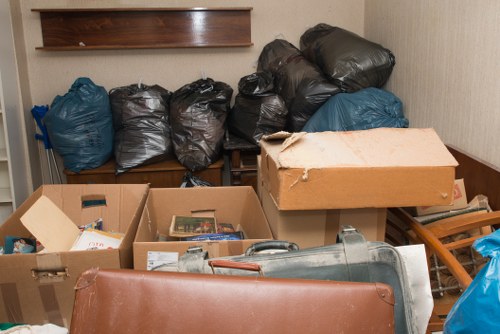
Charity Partnerships and Community Reuse
Partnerships with local charities and social enterprises are central to our Shoreditch house clearances. We work with accredited charities and community organisations such as Shelter, Crisis and smaller local reuse initiatives to redirect furniture, bric-a-brac, working appliances and textiles to people who need them. When items are suitable for reuse, we prefer donation over recycling because reusing extends product life and avoids the embodied carbon associated with remanufacture.Our partnerships also support refurbishment and upcycling projects led by East London social enterprises that focus on training and employment. By channeling items to these partners we create social value — supporting local skills development while keeping materials in circulation. All partnerships are audited so that donations are handled ethically and responsibly, with clear removal and processing records.
Operational changes in our fleet and logistics underpin our low-carbon commitments. We invest in a fleet of low-emission vehicles, including electric vans and Euro 6 hybrid models for heavier loads, so that the operation of our house clearance in Shoreditch contributes less to local air pollution and noise. Route optimisation software reduces unnecessary mileage by consolidating collections and scheduling transfer-station runs efficiently, further shrinking our carbon footprint.
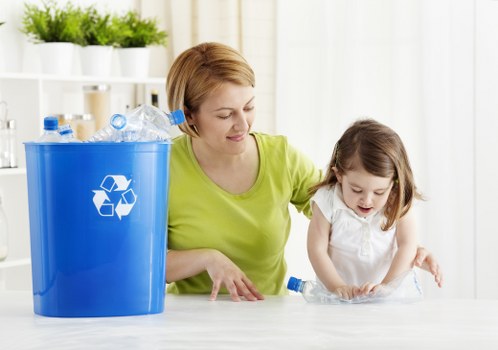 Materials handling and specialist recycling are also part of the service. We segregate hazardous items (batteries, paints, solvents) for specialist processing and ensure that WEEE (electricals and electronics) goes to licensed authorised treatment facilities. Mattresses, mattresses foam, and bulky plastics are directed to processors that can reclaim materials or convert them into secondary products, supporting the sustainable rubbish area concept in practice.
 Beyond physical operations, we invest in training our teams on best-practice separation, contamination avoidance and safe removal techniques. Our staff receive guidance on what can be refurbished and what must be recycled or disposed of by specialist handlers. Communication with clients includes clear, simple advice on preparing items for reuse, which helps improve overall recycling yields and meet our recycling percentage targets.
We also promote small behavioural changes that aggregate into significant sustainability gains across Shoreditch. Encouraging residents and small businesses to segregate waste at source, schedule collections to avoid peak traffic times, and choose reuse-friendly options all contribute to a greener urban clearing model. Our eco-conscious house clearance Shoreditch approach aligns with local sustainability plans and supports borough objectives for higher recycling rates and lower carbon emissions.
Key sustainable features of our service include:
- Clear sorting on-site to maximise recyclable streams and reduce contamination.
- Use of low-carbon vans and route optimisation to minimise emissions.
- Direct transfer to local depots and transfer stations in Hackney and nearby boroughs.
- Charity and social enterprise partnerships for reuse and training opportunities.
- Specialist processing for hazardous waste, WEEE and bulky materials.
As House Clearance Shoreditch continues to evolve, our commitment is to measurable improvement: regular audits, published recycling metrics against our 75%+ target and continual investment in greener vehicles and smarter logistics. This ensures every clearance contributes positively to the local circular economy and to a sustainable rubbish area vision for Shoreditch and surrounding boroughs.
Whether you are arranging a residential move, an office fit-out clearance or a probate clearance, our sustainability-first approach ensures that materials are treated responsibly, charities benefit from suitable donations, and the carbon impact of clearance activity is kept as low as possible. Together, we can make house clearances in Shoreditch part of a practical, local solution to waste, reuse and emission reduction.